5 Exercises That Help Fibromyalgia (Without Causing Flares)
Why Exercise Matters in Fibromyalgia
Living with fibromyalgia often means dealing with persistent pain, fatigue, and stiffness. While exercise may feel intimidating, research consistently shows that gentle, consistent movement can reduce symptoms rather than worsen them. The key is choosing the right types of exercise and avoiding overexertion.
Unlike high-intensity workouts, fibromyalgia-friendly exercises focus on improving circulation, flexibility, and nervous system regulation. When done properly, movement can decrease pain sensitivity and improve energy levels over time.
Understanding the Fear of Flares
Many people with fibromyalgia avoid exercise because they fear triggering a flare-up. This concern is valid. Overdoing activity or jumping into intense routines can increase pain and fatigue. However, avoiding movement entirely may lead to more stiffness and weakness.
The solution lies in pacing. Starting slowly, listening to your body, and gradually increasing duration—not intensity—helps build tolerance safely.
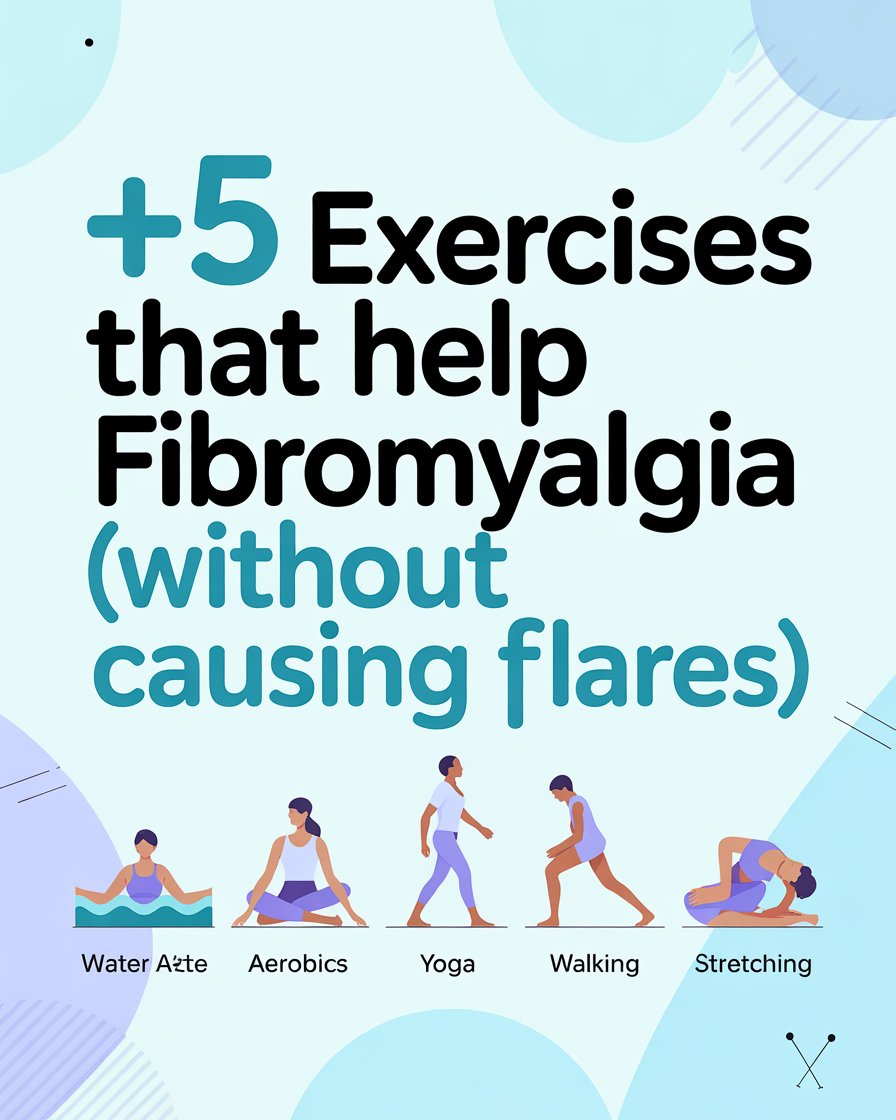
1. Gentle Walking
Walking is one of the simplest and most effective exercises for fibromyalgia. It improves cardiovascular health, boosts mood, and increases blood flow to muscles without excessive strain. Even five to ten minutes per day can make a difference.
To avoid flares, walk at a comfortable pace where you can still hold a conversation. Soft surfaces such as parks or tracks may reduce joint stress. Over time, gradually increase your walking duration by a few minutes each week.
How to Make Walking Safer
Warm up with light stretching before you begin. Wear supportive shoes and stop before you feel exhausted. Consistency matters more than speed or distance.
2. Water Aerobics or Swimming
Water-based exercise is especially beneficial because buoyancy reduces pressure on joints and muscles. Warm water can also soothe pain and relax stiff areas. Swimming or light water aerobics can improve flexibility and strength without heavy impact.
The resistance of water gently strengthens muscles while minimizing injury risk. Sessions of 15–20 minutes are often enough to gain benefits.
Why Warm Water Helps
Warm water supports muscle relaxation and improves circulation. Many people with fibromyalgia report reduced stiffness and improved sleep after consistent aquatic exercise.
3. Gentle Yoga
Yoga combines stretching, breathing, and relaxation techniques. For fibromyalgia, restorative or beginner-level yoga is best. These styles focus on slow movements and supported poses rather than intense strength or flexibility challenges.
Yoga also calms the nervous system, which plays a major role in fibromyalgia pain sensitivity. Deep breathing during poses can reduce stress and lower muscle tension.
Tips for Practicing Yoga Safely
Choose classes labeled “gentle,” “restorative,” or “beginner.” Avoid pushing into painful stretches. Use props such as blocks, bolsters, or blankets for support.
4. Tai Chi
Tai Chi is a slow, flowing form of movement that combines balance, coordination, and controlled breathing. Often described as “meditation in motion,” it is particularly effective for improving flexibility and reducing stress.
Because movements are low-impact and rhythmic, Tai Chi is unlikely to trigger flares when practiced moderately. Studies have shown improvements in pain levels, sleep quality, and overall well-being among participants with fibromyalgia.
The Mind-Body Connection
Tai Chi supports both physical and emotional health. Its meditative nature may help regulate stress hormones that contribute to pain sensitivity.
5. Light Strength Training
Building muscle gently can protect joints and reduce overall pain. Light resistance bands or small hand weights are usually sufficient. Strength training improves posture, endurance, and daily function.
Begin with one set of low repetitions and focus on proper form. Allow rest days between sessions to prevent overexertion.
How to Prevent Overdoing It
Start with very light resistance and increase slowly. If soreness lasts more than a day or two, reduce intensity next time. Tracking progress can help you adjust safely.
The Importance of Pacing
Pacing is essential when exercising with fibromyalgia. Instead of pushing through fatigue, break workouts into smaller segments throughout the day. For example, two 10-minute sessions may feel better than one 20-minute session.
Listening to your body builds long-term consistency. Mild muscle soreness is normal, but sharp or escalating pain is a signal to slow down.
Stretching and Cool Down
Always include gentle stretching at the end of your routine. Cooling down gradually helps prevent stiffness and reduces the likelihood of next-day pain spikes.
Deep breathing during cool-down exercises encourages relaxation and nervous system balance, supporting recovery.
Creating a Sustainable Routine
Consistency is more important than intensity. Choose activities you enjoy so you are more likely to continue long term. A balanced weekly routine might include walking three days a week, yoga once or twice, and light strength training once weekly.
Tracking symptoms in a journal can help identify patterns and adjust your routine accordingly.
When to Talk to a Professional
Before starting any exercise program, consult a healthcare provider, especially if symptoms are severe. Physical therapists familiar with fibromyalgia can design customized programs that match your ability level.
Professional guidance ensures safe progression and reduces the risk of setbacks.
Final Thoughts: Movement Without Fear
Exercise does not have to worsen fibromyalgia symptoms. With the right approach—gentle movement, pacing, and consistency—it can become one of the most powerful tools for symptom management.
Start small, stay patient, and celebrate progress. Over time, these five exercises can improve strength, flexibility, mood, and overall quality of life—without triggering painful flares.

Related Posts